Monduli. Every morning, before the sun grew hot over the plains of Monduli, women, children and donkeys would begin a familiar journey.
Women balanced empty containers on their heads, children walked alongside them, while donkeys carried dozens of jerrycans across dusty paths in search of water.
The trip could take hours, and for many families, fetching water was the first and most exhausting task of the day.
For livestock keepers, the burden was even heavier.
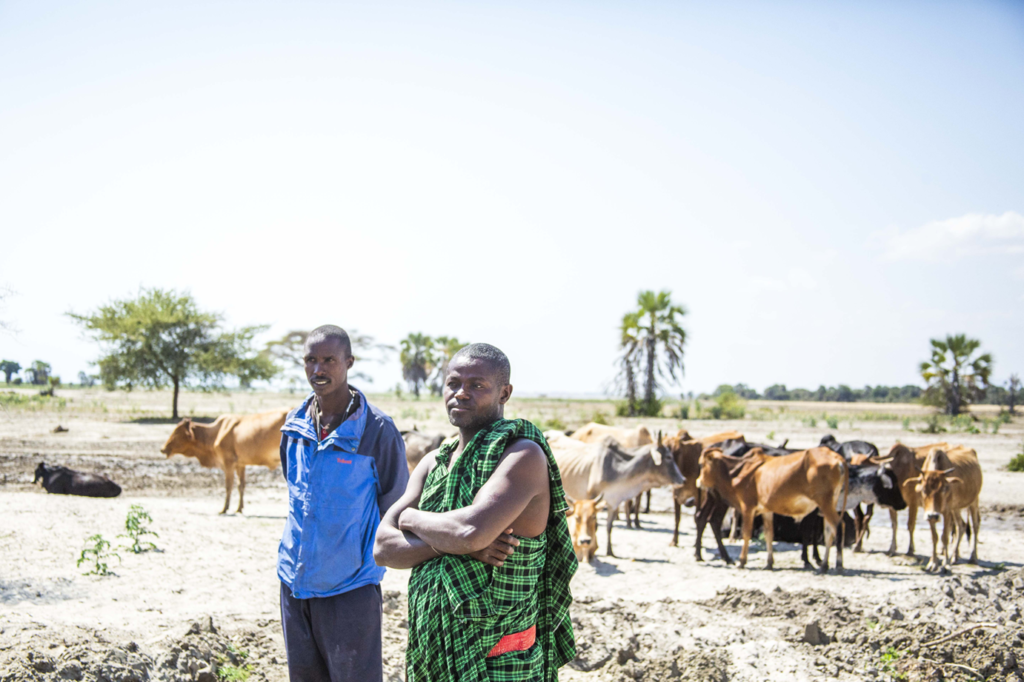
Herds of cattle, goats and sheep were driven for hours in search of watering points, often leaving families with little time for other productive activities.
That was life in Esilale Village and neighbouring communities like Oltukaii and Kanjiro for years.
“We collected water from seasonal ponds located more than 20 kilometres away,” recalls Lazoro Kanongo Laizer, a livestock keeper from nearby Esilalei Village.
“To water our livestock, we sometimes spent more than nine hours walking. It was exhausting for both people and animals.”
His account is echoed by Narali Kereto, a resident of Esilalei, who says women and children carried the greatest burden.
“Every day revolved around looking for water. Many hours that could have been spent on other activities were instead spent walking long distances.”
The struggle was not unique to Esilalei.
About 16 kilometres away, residents of Ortukai Village faced the same challenge.
Oltukai Village Chairperson Rhudda Kilusu Tarishe says reliable access to clean and safe water has remained one of the community’s biggest development challenges.
“For many years our people depended on distant water sources; it is a burden that families carried for generations.”
That reality has now begun to change.
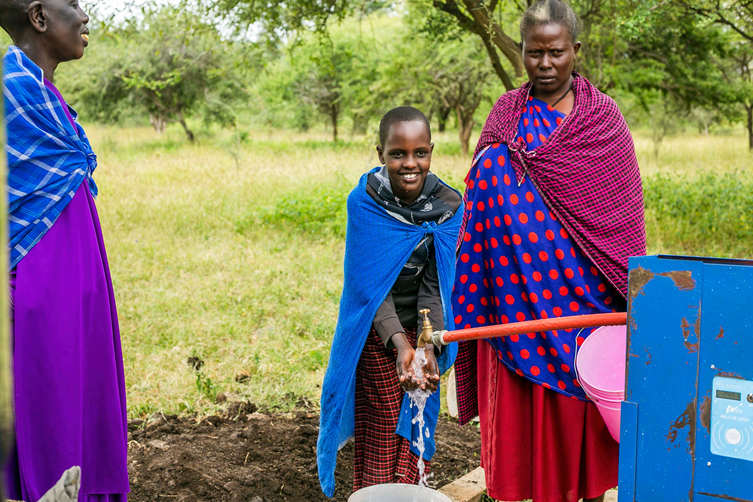
Clean and safe water is now flowing into Ortukai Village, marking a significant milestone for a pastoralist community that, until recently, depended on distant and unreliable water sources.
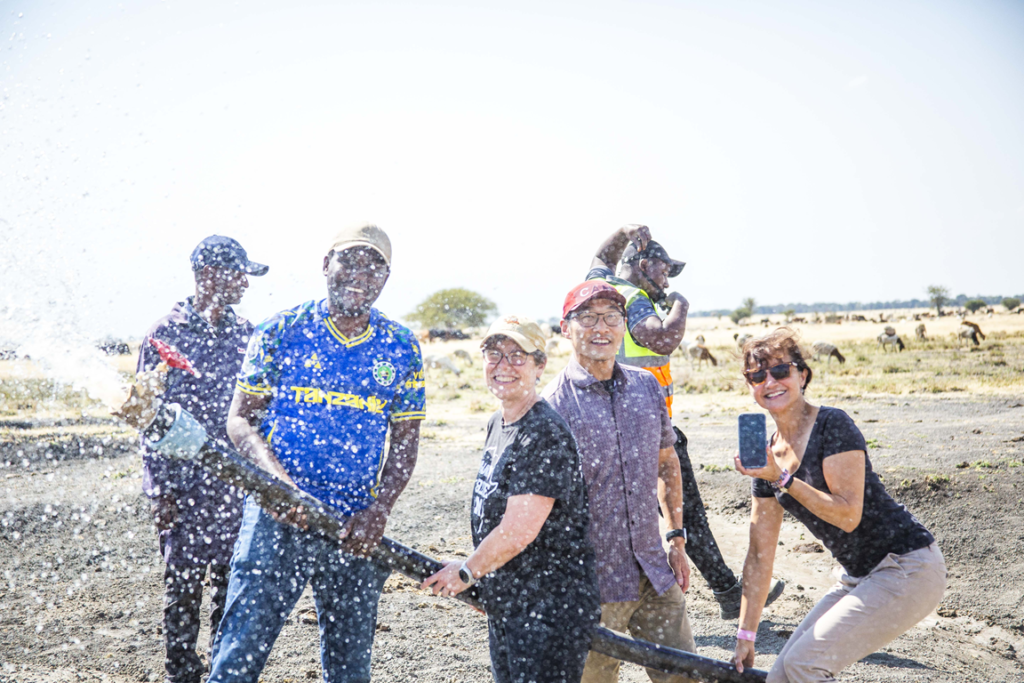
The achievement builds on an earlier intervention in neighbouring Esilalei Village, where residents experienced similar hardships.
According to RUWASA Monduli District Manager, Engineer Neville Msaki, the Government invested TZS 1.9 billion to construct the main water infrastructure, including three storage tanks an elevated 150,000-litre tank supplying two additional reservoirs with capacities of 130,000 litres and 30,000 litres.
However, despite the investment, some settlements remained beyond the reach of the existing distribution network.
That is where the BOLD Challenge Initiative came in.
Implemented by ELICO Foundation with support from the University of Michigan, the initiative complemented the Government’s investment by financing the expansion of the distribution system.
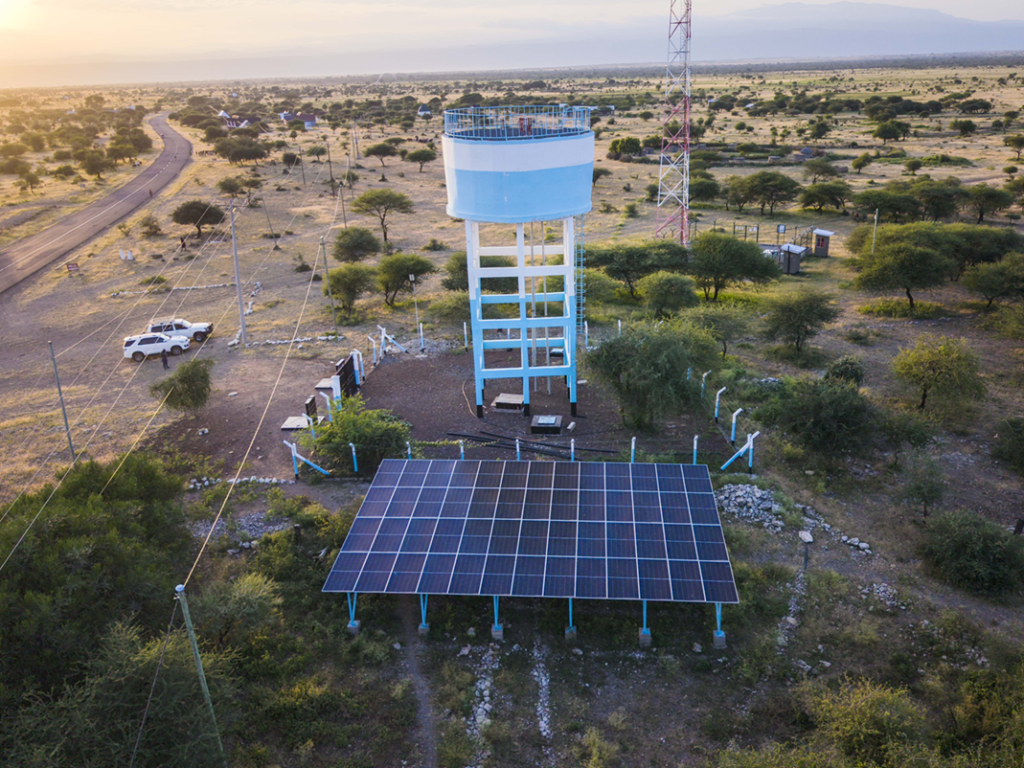
Through the project, ELICO invested USD 75,000 to install a solar-powered pumping system, extend approximately 1.3 kilometres of pipeline, and introduce a prepaid Water ATM system, bringing water services closer to communities that had previously remained underserved.
Today, residents in Esilalei and Kanjiro purchase one unit of water for TZS 500, equivalent to 1,000 litres or 50 buckets of 20 litres each.
In order for the communities to be familiar with the system, the Government is subsidising the first 100 buckets for every household while communities continue receiving training on the use of the system.
The water reaching Ortukai is the latest step in a broader effort to improve water access across pastoralist communities in Monduli.
Idea behind Bold Challenge
The journey to bring water to Ortukai did not begin in a boardroom.
It started with a visit.
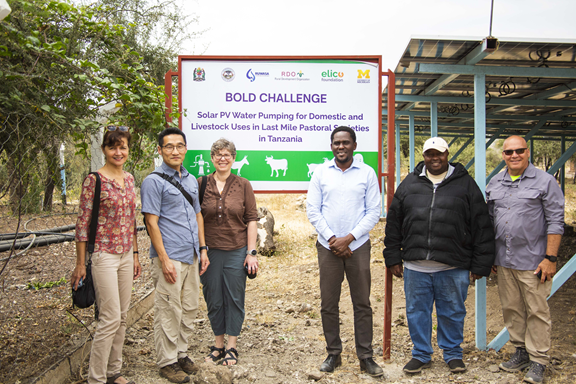
When ELICO Foundation Executive Director Sisty Basil and Professor Kelly M. Askew of the University of Michigan visited Ortukai Village, they encountered pastoralist families whose daily lives revolved around the search for water.
Women and children spent hours walking to distant water sources, while livestock travelled even longer distances in search of drinking water.
According to Sisty Basil, those conversations with residents revealed that improving water access was more than an infrastructure challenge; it was an opportunity to transform livelihoods.
“When we visited Ortukai, we listened to the stories of families who spent much of their day searching for water. We believed there had to be a sustainable solution. Together with our partners at the University of Michigan, we developed an idea that has now grown into a project connecting communities with clean and safe water.” Said Basil
The proposal was submitted to the BOLD Challenge, a University of Michigan initiative that supports innovative, community-driven solutions to complex development challenges around the world.
The initiative brought together an interdisciplinary team comprising Professor Brian Min, Associate Professor of Political Science; Professor Kelly M. Askew, Niara Sudarkasa Collegiate Professor of Anthropology and Afroamerican and African Studies.
Others are Professor Aline Cotel, Arthur F. Thurnau Professor and Associate Professor of Civil and Environmental Engineering; and Sisty Basil Massawe, Executive Director of ELICO Foundation and a former fellow of the University of Michigan African Presidential Scholars (UMAPS) programme.
Professors Min and Askew are also affiliated with the Center for Political Studies at the University of Michigan’s Institute for Social Research.
Beyond providing water, the project is expected to improve public health, reduce the time women and children spend fetching water, strengthen livestock production and increase the resilience of pastoralist communities to climate-related water shortages.
“The solar-powered infrastructure eliminates dependence on fossil fuels or unreliable grid electricity to meet the realities of remote pastoral communities,” said Prof Askew.
The initiative is expected to benefit more than 10,000 people and their livestock, while ongoing work continues to expand the distribution network and install additional Water ATMs in surrounding hamlets.
The University of Michigan has highlighted the initiative as an example of how partnerships between researchers and local organisations can translate community-identified challenges into practical, sustainable solutions.